Australia's third option

Australia is not a small country. We are the sixth largest nation on earth by land mass, one of the most stable democracies in the world, and the custodians of some of the most strategically significant geography on the planet. We gave the world WiFi, the cochlear implant, the Gardasil vaccine and the secret ballot. We have the oldest continuous human culture on earth living among us. We have, when we have chosen to, thought for ourselves.
We are also, right now, involved an undeclared armed conflict we didn't vote for, bound by a 50-year treaty we weren't consulted on, with a surveillance committee designed to make sure we stay that way. And we are approaching a deadline that would hand our biometric data — our faces, our fingerprints, our DNA — to foreign agencies operating under foreign law, with no Australian oversight and no way to take it back.
This piece is about how we got here, what it would take to leave, and whether there is a third option that nobody in the major parties is willing to name.
The no choice narrative
The argument you will hear — the argument used to foreclose every serious discussion about Australian sovereignty — is that we have no choice. That Australia is a middle power in a dangerous region, that the US alliance is the price of security, and that the alternative is either Chinese dominance or strategic isolation.
This is presented as fact. As if the options are fixed and the only question is which master to serve.
It is not fact. It is a choice being made by people who benefit from it remaining unchosen.
The countries that have maintained genuine strategic independence in the post-war period are not utopian abstractions. Sweden was non-aligned for 200 years. Finland maintained strategic autonomy between two superpowers through careful statecraft. New Zealand banned nuclear vessels in 1984, was effectively expelled from ANZUS, and has not been invaded. These are democracies. They are not noticeably less secure than Australia. They made different choices.
The binary — America or China — is a false choice that serves the interests of the people selling it.
Our three honest options
Let's take each seriously.
The United States. The case for the US alliance is real and should not be dismissed. American military power has underwritten regional stability in the Indo-Pacific for 80 years. The intelligence sharing through Five Eyes has genuine value. These are not nothing.
But the alliance as currently constituted is something different. A Secretary of Defence who ordered "no quarter, no mercy" on camera — a direct violation of the Geneva Convention, as Democratic congressman and combat veteran Jason Crow noted immediately. A President who has publicly threatened allied nations with economic coercion. An administration that used nuclear talks with Iran as cover for a military operation already planned, then launched 900 strikes in 12 hours the day after Iran agreed to a diplomatic solution.
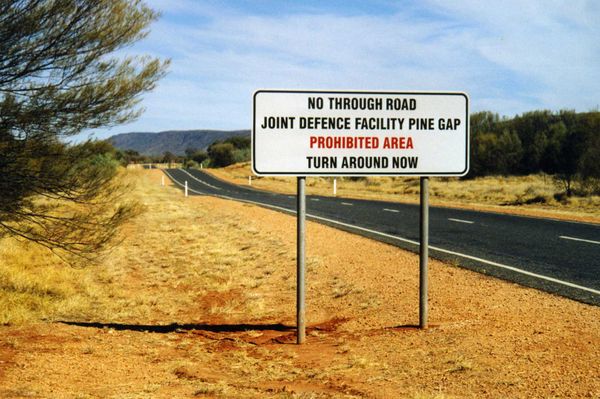
Some will say: wait for Trump to go. But this is the wrong frame entirely. Waiting for Trump to go misses the point. The structure that made the episode possible remains intact regardless of who occupies the White House. Returning to normalcy would be like treating the symptom and ignoring the disease. AUKUS was signed under Biden. The Five Eyes dependency, Pine Gap, the embedded personnel arrangements — none of it was built by Trump and none of it disappears when he leaves. The problem is not the person. It is the architecture.
China. The case against Chinese regional domination is also real. China's territorial claims in the South China Sea are expansionist and have been achieved through intimidation. Its treatment of the Uyghurs, of Hong Kong, of domestic dissent is incompatible with the values Australia says it holds.
But "China is bad" does not automatically mean "America is good." These are separate propositions and conflating them is how we end up with no debate at all.
The third option. In April 1955, 29 newly independent nations gathered in Bandung, Indonesia. They had just freed themselves from European empires. They were being pressured to join either the American or Soviet blocs. They said no to both. The principles they agreed on — sovereignty, non-aggression, non-interference, equality, peaceful coexistence — were not utopian. They were a practical framework for small and middle powers to protect their interests in a world dominated by larger ones.
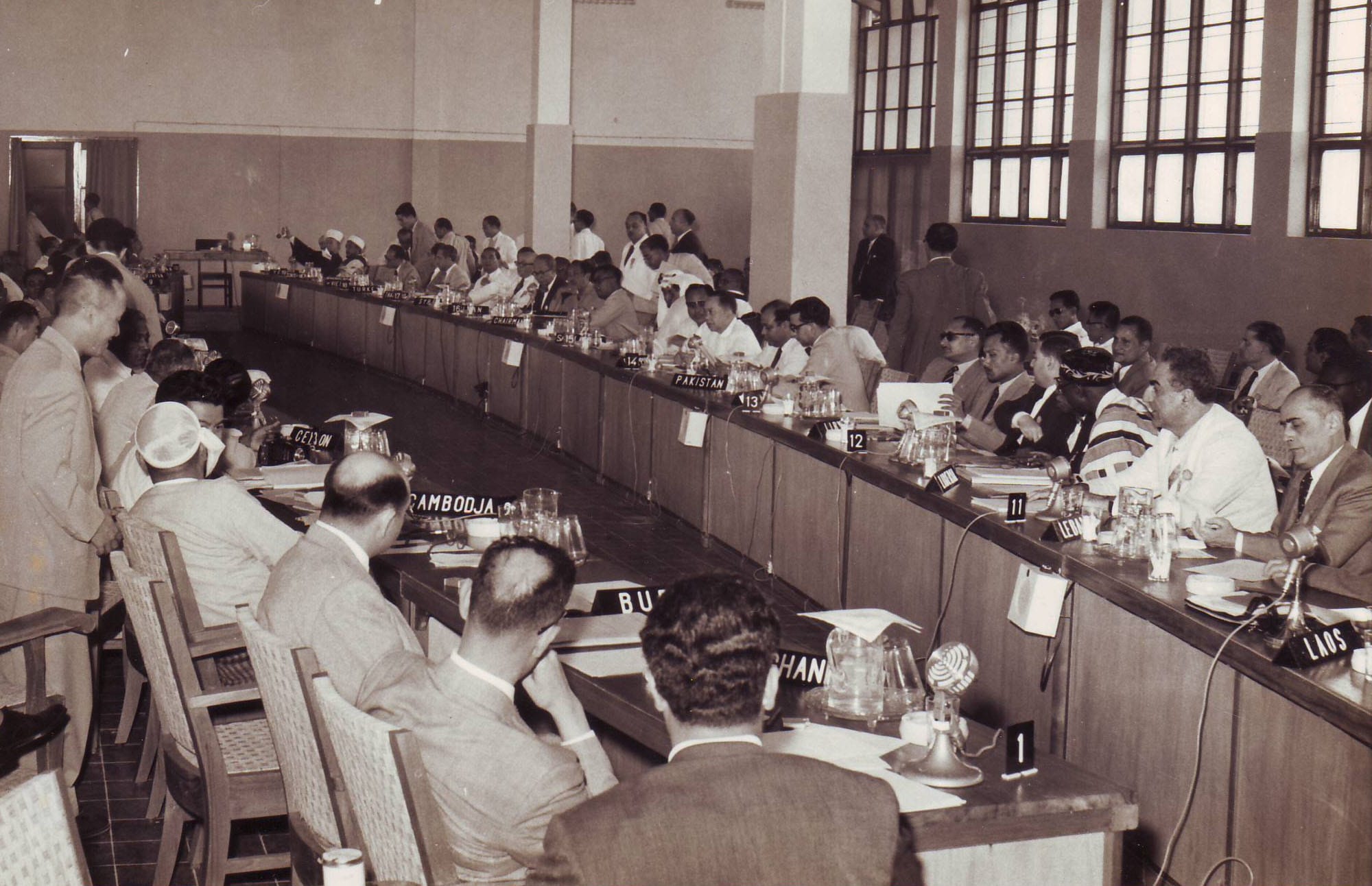
Australia was not at Bandung. It was still a British dominion doing what it was told. That was 70 years ago. The question is whether we are ready for our Bandung moment now.
AUKUS: what we signed and what it costs to leave
Former Prime Minister Paul Keating has been saying it plainly for years. In an interview on ABC 7.30 in August 2024, he said AUKUS is "really about, in American terms, the military control of Australia" — the logical endpoint being to turn Australia into "a US nuclear-armed fort pointed against China."
In a statement published on his website in June 2025, he went further — describing the deal as hastily assembled on an English beach by three leaders who gave no serious consideration to where Australia's strategic interests actually lie, and calling it "the most poorly conceived defence procurement program ever adopted by an Australian government."
Former Foreign Minister Gareth Evans agreed, saying Australia's embrace of AUKUS is "more likely than not to prove one of the worst defence and foreign policy decisions our country has made" — one that puts its sovereign independence "at profound risk."
Even former Liberal Prime Minister Malcolm Turnbull asked publicly: "The UK is conducting a review of AUKUS. The US DoD is conducting a review of AUKUS. But Australia, which has the most at stake, has no review. Our parliament to date has been the least curious and least informed. Time to wake up?"
Here is what Australia has actually signed:
The AUKUS naval nuclear propulsion agreement runs until 31 December 2075. Australia has already paid $800 million to the United States — the first of several payments totalling $368 billion — to help boost American submarine production capacity. In July 2025, Australia signed the Geelong Treaty — a separate 50-year bilateral defence agreement with the UK. Australia must manage nuclear waste domestically. Any submarine technology Australia develops must be shared with the US and UK royalty-free. There are also undisclosed "additional political commitments" — secret undertakings whose content the Defence Minister declined to reveal in parliament, which Senator Shoebridge has warnedmay include obligations to support the US in a conflict with China.
The exit is legally available. Australia can withdraw from AUKUS with 12 months written notice. That is in the treaty. It applies to all parties equally.
The exit is also strategically complex. The $800 million already paid is gone. The capability gap — Australia would be left without a credible submarine program for years — is real. The intelligence dependency through Five Eyes is real.
But here is what Keating noticed in June 2025, before any of us imagined Australia would be in an undeclared war by March 2026: the Pentagon had already launched its own review of AUKUS, led by Elbridge Colby — a senior defence official who described selling submarines to Australia as potentially counterproductive if tensions with China escalate. Keating called it the moment "Washington saves Australia from itself."
The door may be opened from the American side. The question is whether Australia uses that moment to build genuine independence — or panics and tries to keep the alliance at any cost.
The middle power coalition
The third option is not isolation. It is a deliberate alignment with the democracies that share Australia's values and its interest in a rules-based international order — regardless of whether America is currently upholding that order or dismantling it.
The coalition already exists in embryonic form. Canada is actively reducing its dependence on Washington following sustained American economic coercion. France was excluded from its own submarine deal when AUKUS was announced — without notice, without consultation — and has not forgotten. Germany is rearming independently for the first time since World War II. Japan and South Korea are quietly reassessing what American security guarantees are worth. New Zealand has maintained a more independent foreign policy than Australia for 40 years.
These are democracies with functioning institutions, shared values and a common interest in a world where the rules apply to everyone — including the powerful.
A middle power coalition built around these relationships would not replace the US alliance overnight. But it would give Australia options it currently does not have — leverage it currently does not use — and the ability to stand beside America when we choose to, not because we have nowhere else to stand.
The conversation about what that coalition could look like has never seriously been held in Australian public life. Not in parliament, not in the press, not in the security establishment. The Overton window on Australian foreign policy is the narrowest of any comparable democracy.
That is a choice. It can be unmade.
What the duopoly will not ask
Labor and Liberal have identical positions on AUKUS and the US alliance. No matter how Australians vote between those two, the foreign policy does not change.
What has changed is the crossbench. It is bigger than it has ever been. The duopoly's primary vote is at historic lows. The senators most likely to ask hard questions — David Pocock, David Shoebridge, the teal independents — have been deliberately excluded from the secret defence committee precisely because those questions are inconvenient.
But they can still ask them. They can still move motions. They can still call for the Senate inquiry into AUKUS exit options and middle power alternatives that has never been held.
And we can still tell them we are watching.
What you can do
Contact the crossbench directly. Tell them you want a Senate inquiry into the cost and feasibility of AUKUS renegotiation, and into what a middle power coalition foreign policy would look like in practice. That inquiry has never been held. It should be.
Check whether your superannuation fund holds Palantir stock. Many do. Ask them to divest.
Sign the parliamentary petition on biometric data before 1 April 2026.
Support Declassified Australia, the Australia Institute, the Human Rights Law Centre and Australians for War Powers Reform.
And keep asking the question the major parties will not ask: not whether we need allies — we do — but whether these are the right ones, on these terms, decided in these rooms, without us.
This is still our country
Australia invented the secret ballot — the idea that your vote belongs to you and nobody else. We have universal healthcare because we decided that your health should not depend on your wealth. We have the oldest living culture on earth and the growing understanding that it has something to teach us about the long view.
That country does not sleepwalk into undeclared wars. That country does not sign 50-year treaties without asking its citizens. That country does not hand over biometric data to foreign agencies and call it security cooperation.
The third option is not a fantasy. It is what sovereignty looks like when a country decides to take it seriously.
Seventy years ago, 29 newly independent nations gathered in Bandung and said: there is another way.
We are still waiting for Australia to say the same.
Opinions entirely my own.